Introduction
Electronics have become an integral part of our daily lives, from the smartphones we use to the appliances that make our homes more convenient. Behind the scenes, a myriad of electronic components work together to make these devices function effectively. One such component, often overlooked but of utmost importance, is the ceramic capacitor. In this article, we will delve deep into the world of ceramic capacitors, focusing specifically on the role of 220uF Ceramic Capacitors in electronics.
Ceramic Capacitors: A Brief Overview
Before we explore the specifics of 220uF Ceramic Capacitors, it’s crucial to have a basic understanding of ceramic capacitors as a whole. Capacitors are passive electronic components that store and release electrical energy. They consist of two conductive plates separated by a dielectric material.
Ceramic capacitors, as the name suggests, utilize ceramic as their dielectric material. This ceramic material can be made from various compounds, with common options including barium titanate and titanium dioxide. The choice of ceramic material significantly influences the capacitor’s properties and performance.
Ceramic capacitors come in various capacitance values, voltage ratings, and sizes, catering to the diverse needs of electronic circuits. The 220uF Ceramic Capacitor, which we will discuss in detail, is one such variant that offers unique advantages for specific applications.
The Role of Capacitors in Electronics
Before we focus on 220uF Ceramic Capacitors, let’s discuss the broader role of capacitors in electronics. Capacitors serve several critical functions within electronic circuits:
- Energy Storage: Capacitors store electrical energy and release it when needed. This property is particularly important in applications that require the temporary storage of energy, such as flash photography or providing backup power in case of sudden power interruptions.
- Filtering and Decoupling: Capacitors can smooth out voltage and current fluctuations in electronic circuits. They are often used as decoupling capacitors near integrated circuits to ensure stable power supply voltages, reducing noise and interference.
- Timing and Signal Coupling: Capacitors can be used in conjunction with resistors to create timing circuits, enabling the precise control of signal timing in devices like oscillators and timers.
- Signal Coupling and Blocking: Capacitors allow AC signals to pass through while blocking DC signals. This property is used in coupling and blocking applications, such as coupling an audio signal into an amplifier or blocking DC offsets in sensors.
- Noise Reduction: In audio and RF circuits, capacitors are employed to reduce noise and improve signal quality by filtering out unwanted frequencies.
Now that we have a foundational understanding of the role of capacitors in electronics, let’s narrow our focus to the 220uF Ceramic Capacitor and explore its specific applications and advantages.
220uF Ceramic Capacitors: An In-Depth Analysis
The Ceramic Capacitor has a capacitance of 220 microfarads (µF). This value represents its ability to store electrical charge, and it’s an important parameter when selecting a capacitor for a particular application. Here, we will examine various aspects of 220uF Ceramic Capacitors:
- Capacitance Value: As mentioned, the capacitance value of 220µF indicates that this capacitor can store a relatively large amount of charge compared to lower-value capacitors. This property makes it suitable for applications where energy storage or smoothing is required.
- Voltage Rating: Ceramic capacitors, including the 220µF variant, have different voltage ratings. The voltage rating indicates the maximum voltage the capacitor can handle without breaking down. It’s crucial to select a capacitor with a voltage rating higher than the maximum voltage it will encounter in the circuit.
- Dielectric Material: Ceramic capacitors employ ceramic materials like barium titanate or titanium dioxide as their dielectric. These materials provide stability, reliability, and a high dielectric constant, making ceramic capacitors ideal for a wide range of applications.
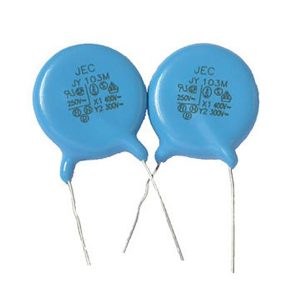
- Size and Package Type: 220uF Ceramic Capacitors are available in various package types, including surface-mount technology (SMT) and through-hole. The choice of package type depends on the specific circuit design and manufacturing process.
Applications of 220uF Ceramic Capacitors
Now that we have a clear understanding of the specifications of Ceramic Capacitors, let’s explore their applications in the world of electronics:
- Power Supplies: Ceramic Capacitors are commonly used in power supply circuits to stabilize voltage levels and reduce ripple. They help ensure that electronic devices receive a clean and stable power supply, preventing voltage spikes and noise.
- Audio Electronics: In audio equipment, such as amplifiers and preamplifiers, 220uF Ceramic capacitors play a crucial role in coupling and decoupling signals. They help block DC offset while allowing audio signals to pass through, ensuring high-quality audio output.
- DC-DC Converters: DC-DC converters are used to step up or down voltage levels in electronic devices. 220uF Ceramic Capacitors are employed in these converters to filter out high-frequency noise and maintain voltage stability.
- Motor Control: Electric motors, whether in industrial machinery or consumer appliances, benefit from the use of 220uF Ceramic capacitors to reduce electromagnetic interference and enhance motor performance.
- LED Lighting: In LED lighting applications, ceramic capacitors help smooth out current and voltage fluctuations, ensuring consistent and flicker-free illumination.
Advantages of 220uF Ceramic Capacitors
The choice of a 220uF Ceramic Capacitor over other capacitor types brings several advantages:
- High Capacitance in a Small Package: 220µF capacitors offer a relatively high capacitance value while being compact. This makes them suitable for applications with space constraints.
- Low Equivalent Series Resistance (ESR): Ceramic capacitors typically exhibit low ESR, which is crucial for applications requiring fast charge and discharge cycles, such as power supplies and voltage regulators.
- High-Frequency Performance: Ceramic capacitors excel in high-frequency applications, making them ideal for circuits that operate at radio frequencies (RF) or digital frequencies.
- Wide Temperature Range: Ceramic capacitors can operate over a wide temperature range, making them suitable for both extreme environmental conditions and everyday electronics.
- Longevity and Reliability: Ceramic capacitors are known for their durability and reliability, with a low failure rate, making them a trusted choice in critical applications.
Selecting the Right 220uF Ceramic Capacitor
When selecting a Ceramic Capacitor for a specific application, it’s essential to consider various factors, including:
- Voltage Rating: Ensure the capacitor’s voltage rating exceeds the maximum voltage it will encounter in the circuit.
- Dielectric Type: Choose the appropriate ceramic dielectric material based on the application’s requirements for stability, temperature tolerance, and capacitance.
- Package Type: Select the package type (SMT or through-hole) that best suits the circuit design and assembly process.
- Tolerance: Capacitors come with a tolerance rating, which indicates the allowable deviation from the specified capacitance value. Ensure the tolerance meets the precision requirements of the circuit.
- Operating Temperature: Consider the temperature range in which the capacitor will operate to ensure it can withstand the environmental conditions of the application.
Conclusion
In the intricate world of electronics, capacitors, especially 220uF Ceramic Capacitors, serve as unsung heroes, quietly but significantly contributing to the proper functioning of electronic devices. Their ability to store and release electrical energy, filter out noise, stabilize voltage, and perform various other functions makes them indispensable components in countless applications.