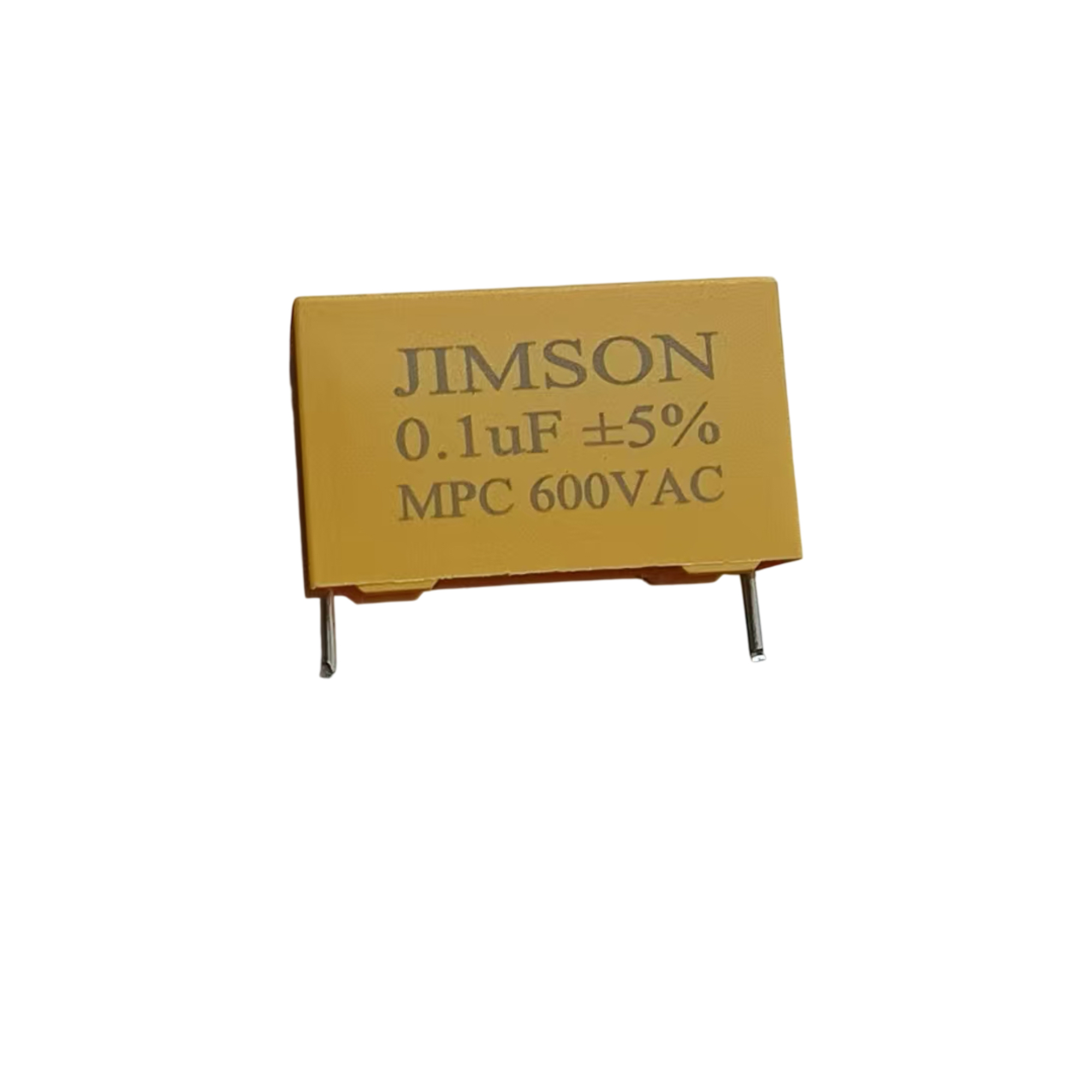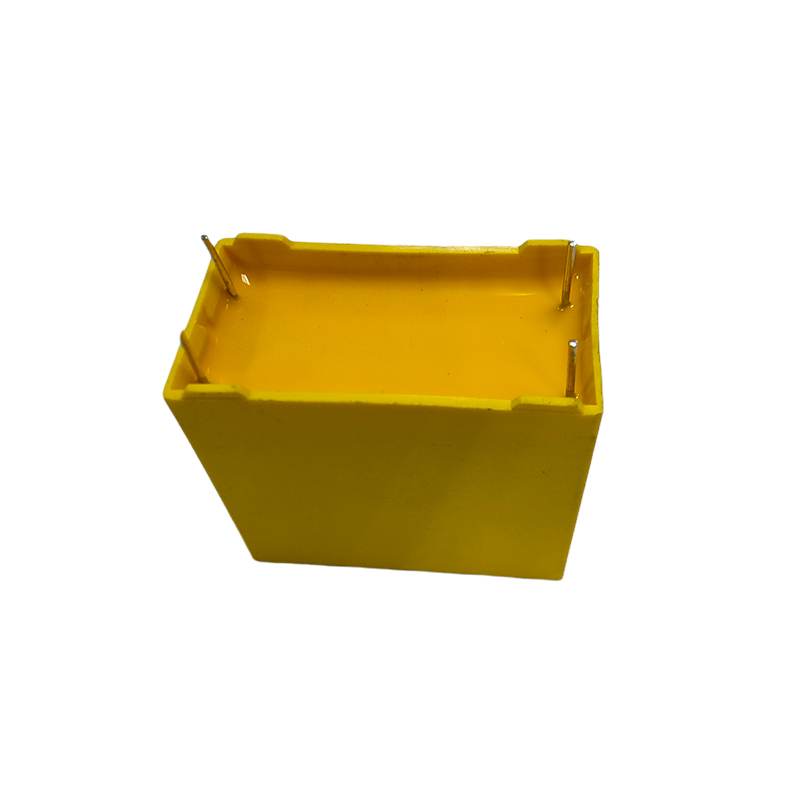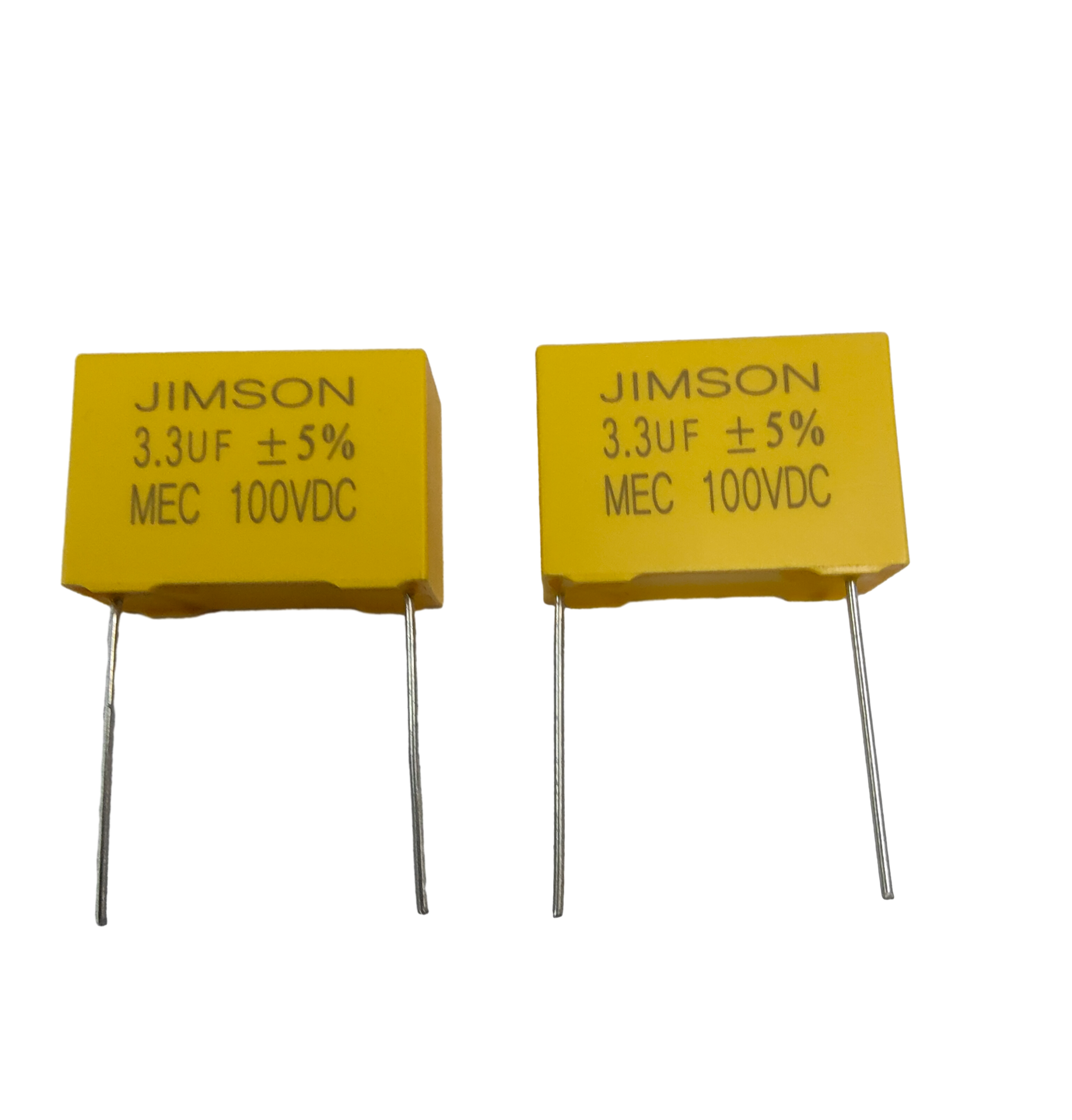

3.3uF 100VDC CL23 Polyester Film Capacitor Specifications:
| Dielectric | Polyester film |
| Electrodes | Vacuum evaporated metal |
| Coating | Encapsulated in reinforced flame retardant plastic case sealed with epoxy resin meeting the requirement of UL 94V-0 |
| Leads | Radial leads of tinned wire |
| Reference standard | IEC 384-2 grade 1; SJ/T 10873-1996 |
| Climatic catalogue | 40/100/21(From 85°C up to 105°C with derating voltage 1.25%/°C) |
| Capacitance versus rated voltage (UR) | 0.001μF-6.8μF50/100VDC 0.001μF-6.8μF/250VDC 0.001μF-2.2uF/400VDC 0.001uF-1.5uF/630VDC |
| Capacitance tolerance | M = ±20%, K = ±10%, and J = ±5% |
| Dissipation factor | C≤1.0uF DF≤0.8% C>1.0uF DF≤1.0% (at 20°C, 1KHz) |
| Voltage-proof | 1.6*UR Unit:VDC (5s at 20°C) |
| Insulation resistance | C≤0.33µF, IR≥15000MΩ, C>0.33µF, IR*C≥3,000s (1 minute at 20°C and RH≤65%) |
| Endurance | 1000 hours with 125% of rated voltage at 85°C. After the test: ΔC/C ≤8%; ΔDF ≤0.30%(C>1uF);ΔDF ≤0.50%(C≤1uF); IR ≥0.5% of the specified value (20°C, 1kHz) |


The Evolution of CL23 Polyester Film Capacitor Technology:
To appreciate the significance of the 3.3uF 100VDC CL23 Polyester Film Capacitor , it’s essential to trace the evolution of capacitor technology:
1. Early Capacitors: The earliest capacitors were simple devices with basic constructions, often using materials like glass, wax, or oil. These capacitors had limitations in terms of size, capacitance, and voltage ratings.
2. Introduction of Film Capacitors: The development of film capacitors, including those with polyester film dielectrics, marked a significant advancement. Film capacitors offered improved stability, reliability, and efficiency compared to their predecessors.
3. Advancements in Dielectric Materials: Ongoing research led to advancements in dielectric materials, contributing to the development of capacitors with higher capacitance, lower losses, and enhanced performance.
4. Miniaturization and Surface Mount Technology (SMT): The demand for smaller and more compact electronic devices drove the miniaturization of capacitors. Surface mount technology facilitated the integration of capacitors into densely packed electronic circuits.
Challenges and Innovations in Capacitor Technology:
While capacitor technology has come a long way, challenges persist, driving ongoing innovations:
1. Miniaturization Challenges: As electronic devices become smaller and more complex, the challenge lies in developing capacitors that maintain performance while being compact enough to fit within limited spaces.
2. Higher Capacitance Requirements: Emerging technologies often demand capacitors with higher capacitance values. Researchers are exploring new materials and designs to meet the increasing capacitance requirements of modern electronic devices.
3. Temperature Stability: Capacitors must maintain stable performance across a range of temperatures. Innovations focus on developing capacitors that can withstand extreme temperature conditions without compromising functionality.
4. Green Capacitors: The push for sustainability in electronics has led to the development of environmentally friendly or “green” capacitors. Manufacturers are exploring eco-friendly materials and manufacturing processes to reduce the environmental impact of capacitors.
Practical Considerations for Capacitor Selection:
When selecting capacitors for electronic circuits, engineers and designers must consider various factors to ensure optimal performance and reliability:
1. Capacitance Value: The capacitance value, in this case, 3.3uF, should be selected based on the specific requirements of the circuit. Different applications may demand different capacitance values for optimal performance.
2. Voltage Rating: The capacitor’s voltage rating should exceed the maximum voltage expected in the circuit to ensure safety and reliable operation.
3. Dielectric Material: The choice of dielectric material, in this case, polyester film, impacts the capacitor’s performance and stability. Polyester film is known for its high dielectric strength and stability.
4. Temperature Range: Consideration must be given to the temperature range in which the capacitor will operate. Capacitors should exhibit stability and reliability across the expected temperature variations.